ASSC2558
ระบบบันทึกวัตถุมงคลล้ำค่า
System to record of the sacred objects
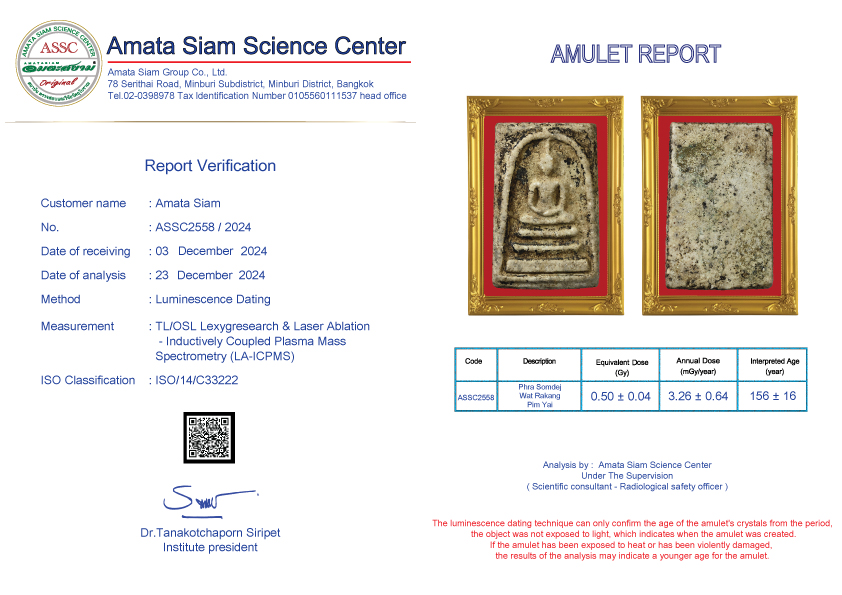
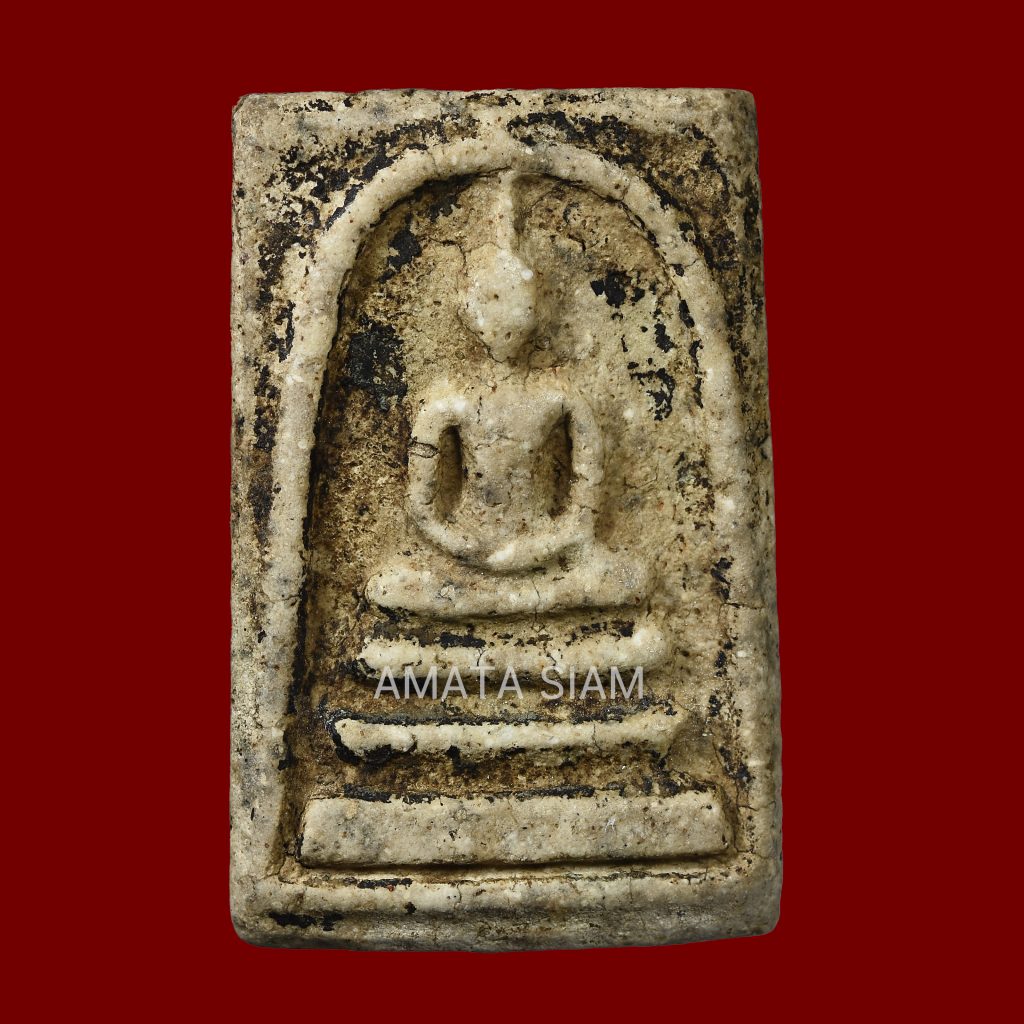
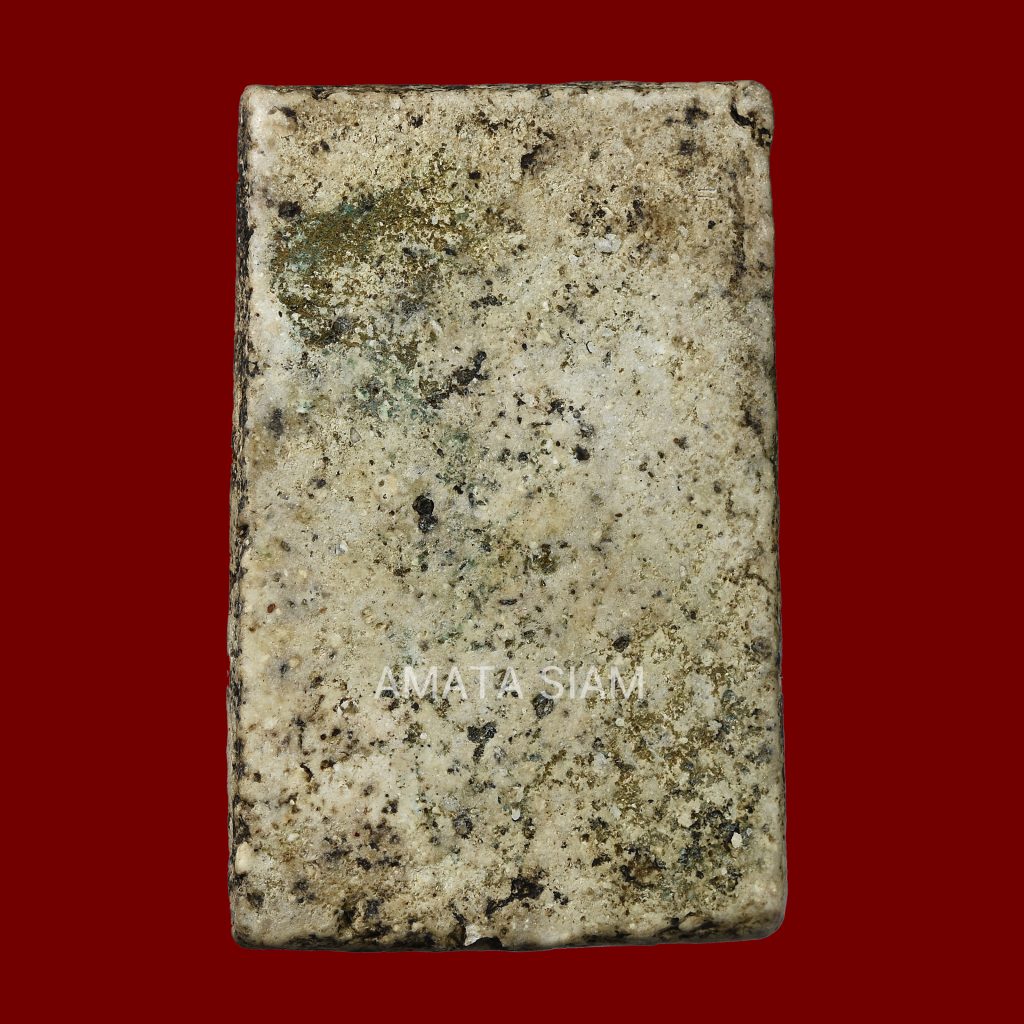
พระสมเด็จ วัดระฆังฯ พิมพ์ใหญ่ เขตบางกอกน้อย กทม.
Phra Somdej Wat Rakang, Pim Yai, Bangkok Noi, Bangkok Thailand
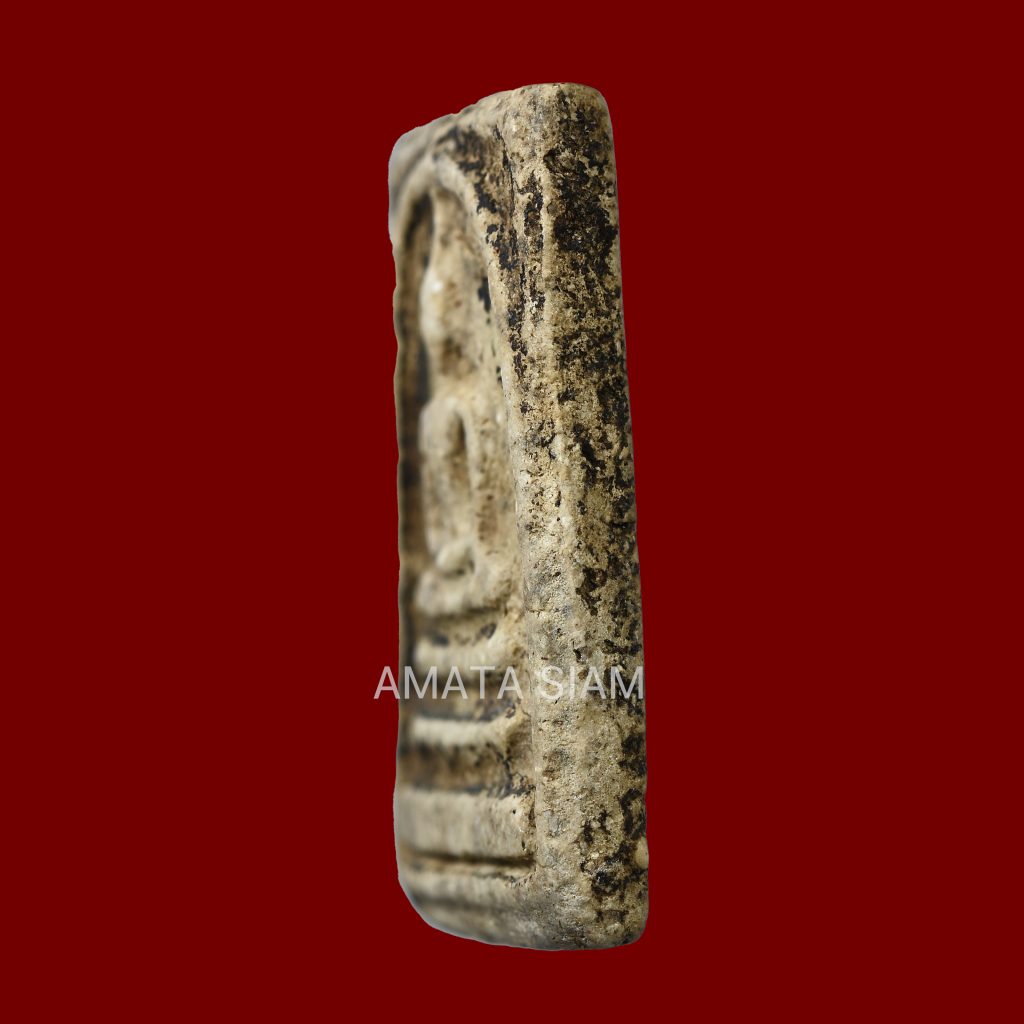
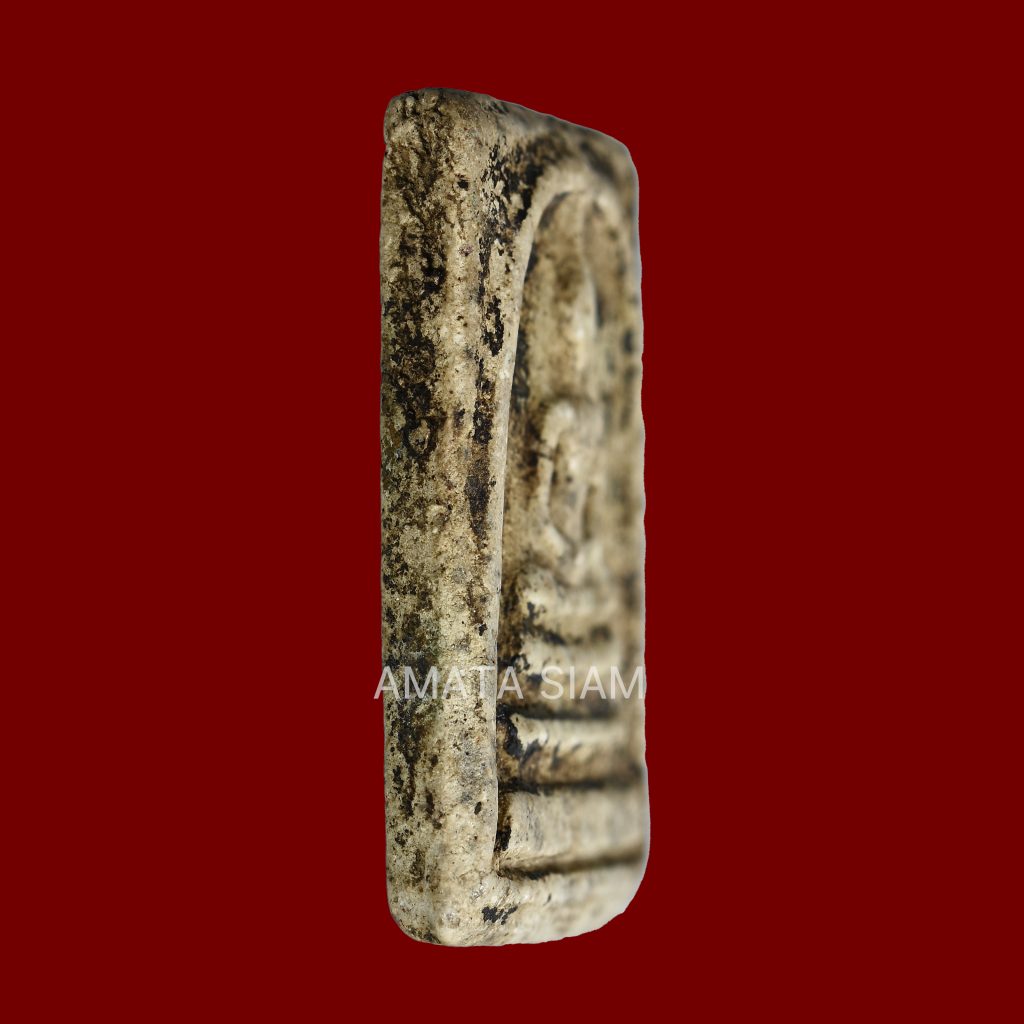
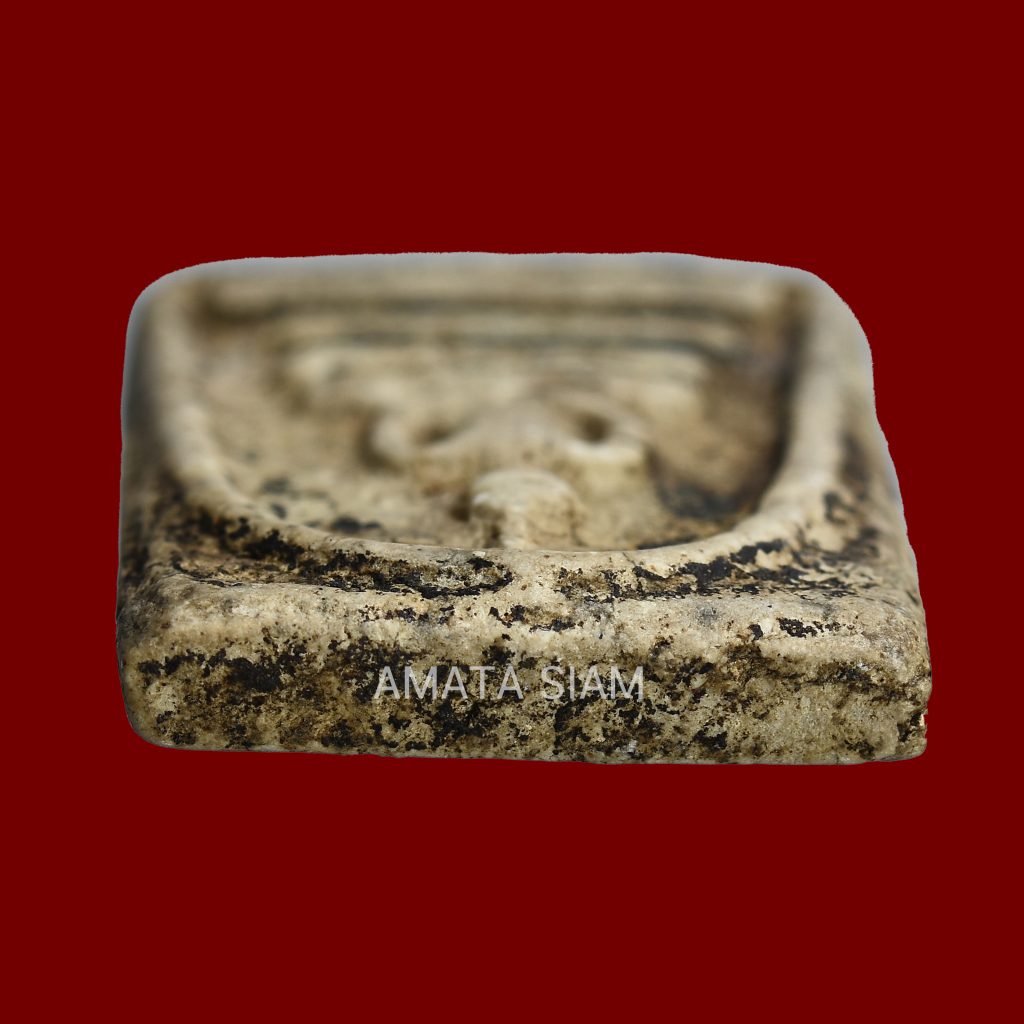
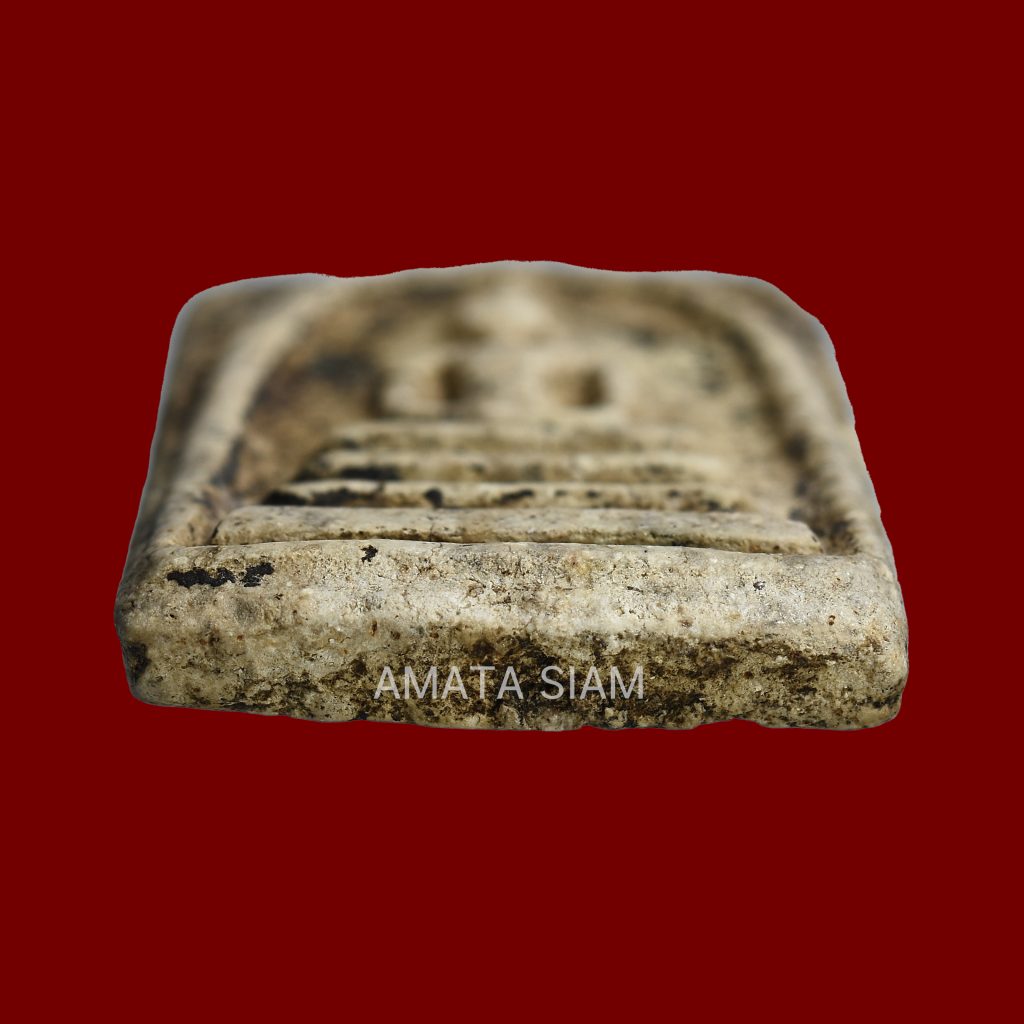
สมเด็จพระพุฒาจารย์ (โต พฺรหฺมรํสี) :
พระมหาเถระผู้เป็นศูนย์รวมศรัทธาแห่งกรุงรัตนโกสินทร์ สมเด็จพระพุฒาจารย์ (โต พฺรหฺมรํสี) หรือที่ประชาชนทั่วไปเรียกกันว่า “หลวงปู่โต” เป็นพระมหาเถระผู้มีบทบาทสำคัญยิ่งในประวัติศาสตร์พระพุทธศาสนาไทยช่วงต้นกรุงรัตนโกสินทร์ ท่านมิได้เป็นเพียงพระสงฆ์ผู้ทรงสมณศักดิ์สูงสุดรูปหนึ่งเท่านั้น หากยังเป็นสัญลักษณ์ของพระผู้เปี่ยมด้วยเมตตา ปัญญา ความเรียบง่าย และเป็นต้นแบบของ “พระนักปฏิบัติ” ที่ประชาชนเข้าถึงได้อย่างแท้จริง
สมเด็จโตเกิดเมื่อ พ.ศ. 2331 ในสมัยปลายกรุงธนบุรีต่อเนื่องต้นกรุงรัตนโกสินทร์ สภาพสังคมในยุคนั้นยังอยู่ในช่วงฟื้นฟูประเทศหลังสงคราม บ้านเมืองยังไม่มั่นคงดังปัจจุบัน ชีวิตของผู้คนเรียบง่ายและยากลำบาก ท่านเกิดในครอบครัวสามัญชน มิใช่ตระกูลขุนนาง แต่กลับเติบโตขึ้นมาเป็นบุคคลสำคัญระดับแผ่นดิน ซึ่งสะท้อนถึงระบบคุณค่าของพระพุทธศาสนาไทยที่ยกย่อง “คุณธรรม” มากกว่าสายเลือด ตั้งแต่วัยเยาว์ สมเด็จโตมีลักษณะโดดเด่นคือ ความเฉลียวฉลาด ความจำเป็นเลิศ และความสนใจใฝ่รู้ทางธรรม แม้จะมิได้มีบันทึกรายละเอียดชีวิตวัยเด็กอย่างเป็นระบบ แต่เรื่องเล่าต่าง ๆ ล้วนสะท้อนว่าท่านเป็นผู้มีจิตใจมั่นคง มีอุปนิสัยเรียบง่าย ไม่ยึดติดรูปแบบหรือพิธีการ การบวชและการศึกษาพระธรรม สมเด็จโตอุปสมบทเป็นพระภิกษุและอุทิศตนให้แก่การศึกษาพระธรรมวินัยอย่างจริงจัง ท่านมิได้โดดเด่นเพียงด้านปริยัติ (การเรียนคัมภีร์) แต่ยังเชี่ยวชาญด้านปฏิบัติ (สมถะ–วิปัสสนา) จนเป็นที่ยอมรับในหมู่พระเถระร่วมสมัย ลักษณะสำคัญของสมเด็จโตคือ การไม่ยึดติดในกรอบแบบแผน ท่านสามารถอธิบายธรรมะด้วยภาษาชาวบ้าน ใช้อุปมาอุปไมยที่เข้าใจง่าย ทำให้คำสอนของท่านเข้าถึงประชาชนทุกระดับ ตั้งแต่สามัญชนไปจนถึงพระมหากษัตริย์ นี่คือเหตุผลสำคัญที่ทำให้ชื่อเสียงของท่านแผ่กว้างอย่างรวดเร็ว
สมณศักดิ์และตำแหน่งสำคัญ ด้วยความรู้ ความสามารถ และคุณธรรมอันเป็นที่ประจักษ์ สมเด็จโตได้รับการถวายสมณศักดิ์เป็น “สมเด็จพระพุฒาจารย์” ซึ่งเป็นสมณศักดิ์สูงสุดของคณะสงฆ์ไทย แสดงถึงการยอมรับทั้งจากคณะสงฆ์และราชสำนัก นอกจากนี้ ท่านยังดำรงตำแหน่ง เจ้าอาวาสวัดระฆังโฆสิตาราม วัดสำคัญริมแม่น้ำเจ้าพระยา วัดระฆังในสมัยสมเด็จโตมิได้เป็นเพียงศูนย์กลางทางศาสนา แต่ยังเป็นศูนย์รวมทางจิตใจของผู้คนในกรุงเทพฯ ท่านใช้วัดเป็นพื้นที่เผยแผ่ธรรม สร้างพระเครื่อง และประกอบสาธารณกุศลอย่างต่อเนื่อง
บทบาททางจิตวิญญาณและวัฒนธรรม สมเด็จโตเป็นที่เคารพทั้งในฐานะพระนักปฏิบัติ พระนักเทศน์ และพระเกจิอาจารย์ ท่านเป็นผู้แต่งและเผยแพร่บทสวดสำคัญ เช่น คาถาชินบัญชร ซึ่งยังคงได้รับความนิยมมาจนถึงปัจจุบัน คาถาดังกล่าวสะท้อนแนวคิดของท่านที่เน้นพุทธานุสติและการพึ่งพาคุณพระรัตนตรัยมากกว่าความเชื่อไสยศาสตร์เพียงอย่างเดียว ในช่วงปลายชีวิต สมเด็จโตยังมีบทบาทสำคัญในการริเริ่มสร้างพระพุทธรูปองค์ใหญ่ เช่น หลวงพ่อโตวัดอินทรวิหาร ซึ่งเป็นสัญลักษณ์ของศรัทธาและพลังชุมชน การสร้างพระสมเด็จ : สามยุคแห่งตำนาน ผลงานที่ทำให้สมเด็จโตเป็นที่รู้จักอย่างกว้างขวางที่สุด คือ การสร้างพระสมเด็จวัดระฆัง ซึ่งได้รับการยกย่องว่าเป็น “จักรพรรดิ์แห่งพระเครื่องไทย” การสร้างพระสมเด็จมิใช่เพียงเพื่อวัตถุมงคล หากเป็นการสืบทอดพุทธศิลป์และความเชื่อทางศาสนา
นักวิชาการและวงการพระเครื่องนิยมแบ่งการสร้างพระสมเด็จออกเป็น สามยุคหลัก ได้แก่
ยุคต้น (ประมาณ พ.ศ. 2369–2390 ในรัชกาลที่ 3) เป็นช่วงเริ่มต้นการสร้าง พระสมเด็จยุคนี้เชื่อว่าสร้างเพื่อบรรจุกรุเจดีย์ภายในวัดระฆัง มุ่งเน้นพุทธคุณและศาสนพิธีมากกว่าการแจกจ่าย
ยุคกลาง (ประมาณ พ.ศ. 2390–2400 ในรัชกาลที่ 4) เป็นช่วงที่สมเด็จโตมีบทบาทชัดเจนมากขึ้น พระสมเด็จเริ่มถูกแจกแก่ศิษยานุศิษย์และผู้มีศรัทธา สะท้อนการขยายบทบาททางสังคมของท่าน
ยุคปลาย (ประมาณ พ.ศ. 2400–2415 ในรัชกาลที่ 5) เป็นช่วงใกล้มรณภาพ การสร้างพระมีลักษณะเป็นการสืบทอดศรัทธาและปิดตำนานการสร้างพระสมเด็จในยุคของสมเด็จโตโดยตรง
สมเด็จพระพุฒาจารย์ (โต พฺรหฺมรํสี) มรณภาพเมื่อ พ.ศ. 2415 สิริอายุประมาณ 84–85 ปี การจากไปของท่านมิได้หมายถึงจุดสิ้นสุดของอิทธิพล หากกลับเป็นจุดเริ่มต้นของการสืบทอดศรัทธา คำสอน และวัตถุมงคลที่ยังคงมีบทบาทในสังคมไทยจนถึงปัจจุบัน สมเด็จโตคือแบบอย่างของพระสงฆ์ผู้ยืนอยู่เหนือกาลเวลา ท่านผสานปริยัติ ปฏิบัติ และปฏิเวธเข้าด้วยกันอย่างกลมกลืน ยศตำแหน่งมิได้ทำให้ท่านห่างไกลประชาชน ตรงกันข้าม กลับทำให้ท่านเป็นศูนย์รวมศรัทธาของทุกชนชั้น พระสมเด็จที่ท่านสร้างจึงมิใช่เพียงพระเครื่อง หากเป็น “สัญลักษณ์ของธรรมะที่จับต้องได้” ซึ่งยังคงคุณค่าอยู่เหนือกาลเวลา
Somdet Phra Buddhacarya (To Phrommarangsi):
The Supreme Buddhist Patriarch and Spiritual Pillar of Early Rattanakosin Thailand**
Somdet Phra Buddhacarya (To Phrommarangsi), commonly known among the public as Luang Pu To, was one of the most influential senior monks in the history of Thai Buddhism during the early Rattanakosin period. He was not merely a monk of the highest ecclesiastical rank, but also a symbol of compassion, wisdom, simplicity, and an exemplary model of a “practicing monk” who was genuinely accessible to the people.
Somdet To was born in B.E. 2331 (1788 CE), during the transitional period from late Thonburi to early Rattanakosin. At that time, Thai society was still recovering from prolonged warfare; the country lacked stability, and the lives of ordinary people were marked by simplicity and hardship. Born into a commoner family rather than a noble lineage, Somdet To later rose to become a figure of national importance, reflecting the Buddhist value system that honors moral virtue over ancestry.
From a young age, Somdet To displayed remarkable intelligence, an excellent memory, and a strong inclination toward spiritual learning. Although systematic records of his childhood are limited, various traditional accounts consistently describe him as mentally steadfast, modest in character, and free from attachment to rigid formalities.
Ordination and Buddhist Education
Somdet To was ordained as a Buddhist monk and devoted himself wholeheartedly to the study of the Vinaya and the Dhamma. He excelled not only in pariyatti (scriptural studies) but also in patipatti (meditative practice), particularly samatha and vipassana, earning widespread recognition among contemporary senior monks.
One of his defining characteristics was his refusal to be constrained by rigid conventions. He conveyed Buddhist teachings in simple, colloquial language, employing vivid analogies that made profound principles understandable to people of all social classes—from common villagers to members of the royal court. This accessibility was a key reason for the rapid spread of his reputation.
Ecclesiastical Rank and Official Positions
Through his evident wisdom, capability, and moral excellence, Somdet To was bestowed the ecclesiastical title “Somdet Phra Buddhacarya,” the highest monastic rank within the Thai Sangha, signifying supreme recognition from both the monastic community and the royal establishment.
He also served as Abbot of Wat Rakhang Khositaram, an important monastery along the Chao Phraya River. Under his leadership, Wat Rakhang functioned not only as a religious center but also as a spiritual refuge for the people of Bangkok. He used the temple as a base for disseminating the Dhamma, creating sacred amulets, and conducting extensive charitable works.
Spiritual and Cultural Influence
Somdet To was revered as a meditation master, a preacher, and a highly respected monk with spiritual attainments. He composed and propagated important Buddhist chants, most notably the Chinabanchorn Katha, which remains widely recited today. This chant reflects his emphasis on mindfulness of the Buddha and reliance on the Triple Gem rather than purely supernatural beliefs.
In the later years of his life, Somdet To also played a key role in initiating the construction of monumental Buddha images, such as Luang Pho To at Wat Intharawihan, which stands as a symbol of communal faith and collective spiritual power.
The Creation of Phra Somdej: The Legend of Three Periods
The achievement for which Somdet To is most widely known is the creation of Phra Somdej of Wat Rakhang, often hailed as the “King of Thai Amulets.” The creation of these amulets was not merely for talismanic purposes but represented the continuation of Buddhist art and religious belief.
Scholars and collectors generally classify the creation of Phra Somdej into three main periods:
- Early Period (approximately B.E. 2369–2390, reign of King Rama III):
This initial phase focused on creating amulets primarily for enshrinement within the stupas of Wat Rakhang, emphasizing spiritual merit and ritual significance rather than distribution. - Middle Period (approximately B.E. 2390–2400, reign of King Rama IV):
During this phase, Somdet To’s influence became more pronounced, and Phra Somdej amulets began to be distributed to disciples and devotees, reflecting his expanding social role. - Late Period (approximately B.E. 2400–2415, reign of King Rama V):
Occurring near the end of his life, this period represents the culmination of the Phra Somdej tradition directly associated with Somdet To.
Somdet Phra Buddhacarya (To Phrommarangsi) passed away in B.E. 2415 (1872 CE) at the age of approximately 84–85. His passing did not mark the end of his influence; rather, it signaled the beginning of a lasting legacy of faith, teachings, and sacred objects that continue to shape Thai society today.
Somdet To stands as a timeless exemplar of the Buddhist monastic ideal, harmoniously integrating pariyatti, patipatti, and pativedha. His high rank never distanced him from the people; instead, it reinforced his role as a spiritual anchor for all social classes. The Phra Somdej amulets he created are thus not merely objects of veneration, but enduring symbols of tangible Dhamma that transcend time.
🇨🇳 中文翻译(简体中文)
颂德·帕佛陀迦罗尊者(多·梵摩朗西):
拉达那哥欣初期的精神核心与佛教大德
颂德·帕佛陀迦罗尊者(多·梵摩朗西),民间尊称为“龙婆多”,是泰国拉达那哥欣王朝初期佛教史上最具影响力的高僧之一。他不仅是一位拥有最高僧阶的僧侣,更是慈悲、智慧、简朴与修行精神的象征,是广大民众真正能够亲近的“修行型高僧”典范。
尊者诞生于 佛历2331年(公元1788年),正值吞武里王朝末期至拉达那哥欣王朝初期的过渡阶段。当时国家刚从长期战乱中恢复,社会尚未稳定,百姓生活朴素而艰辛。尊者出身于平民家庭,而非贵族世家,却最终成为国家级的重要人物,充分体现了佛教重视德行胜于出身的价值观。
自幼年起,尊者便展现出非凡的智慧、过人的记忆力以及对佛法的浓厚兴趣。尽管其童年事迹缺乏系统文献记载,但各种传统传说一致指出,他心性坚定,为人谦逊,不拘泥于形式与仪轨。
出家与佛学修行
尊者出家后,全身心投入于佛法与戒律的学习与实践。他不仅在教理研究(巴利经典)方面造诣深厚,更在禅修实践(止观修行)上成就卓著,因而深受当时高僧大德的尊敬。
尊者的一大特色在于不拘泥于教条。他善于以通俗易懂的语言和生动的比喻阐释佛法,使其教义能够被不同阶层的人理解,从普通百姓到王公贵族皆能受益。这种亲民而深刻的弘法方式,使其声名迅速传播。
僧阶与重要职务
凭借卓越的智慧、能力与清净的品德,尊者被敕封为 “颂德·帕佛陀迦罗”,这是泰国僧团中最高等级的僧阶,象征着僧界与王室对其德行的最高认可。
此外,尊者还担任 曼谷拉康寺(Wat Rakhang Khositaram)住持。在其主持期间,拉康寺不仅是宗教中心,更成为民众心灵的依归。尊者以寺院为弘法基地,持续开展讲法、铸造佛牌及各类公益善行。
精神与文化影响
尊者既是禅修大师、弘法者,也是备受尊崇的高僧。他所传诵并弘扬的 《胜利护经》(Chinabanchorn) 至今仍广泛流传。该经文体现了他强调忆念佛陀、依止三宝,而非单纯依赖神秘信仰的思想。
在晚年时期,尊者还倡导兴建大型佛像,例如 因他拉威汉寺的大佛龙婆多,成为凝聚社会信仰与集体精神力量的重要象征。
崇迪佛牌的铸造:三大时期的传奇
尊者最广为人知的成就,是铸造 拉康寺崇迪佛牌,被誉为“泰国佛牌之王”。这些佛牌的铸造并非单纯作为护身圣物,而是佛教艺术与信仰的延续。
学界与佛牌界普遍将崇迪佛牌的铸造分为 三个主要时期:
- 早期(约佛历2369–2390年,拉玛三世时期):
主要用于供奉与封藏于拉康寺佛塔之中,重在宗教仪式与功德意义,而非流通分发。 - 中期(约佛历2390–2400年,拉玛四世时期):
尊者的社会影响日益显著,佛牌开始分赠予弟子与虔诚信众。 - 晚期(约佛历2400–2415年,拉玛五世时期):
接近尊者圆寂之时,象征着其亲自参与的崇迪佛牌铸造传统的最终阶段。
颂德·帕佛陀迦罗尊者(多·梵摩朗西)于 **佛历2415年(公元1872年)**圆寂,享年约84至85岁。他的离世并非影响的终结,而是其信仰、教法与圣物长久流传的起点,至今仍深刻影响着泰国社会。
尊者是超越时代的僧侣典范,圆融地实践了教理、修行与证悟三者合一。他的崇高地位并未使其远离大众,反而使其成为全民共同的精神依归。其所铸造的崇迪佛牌,不仅是信仰的对象,更是“可触及的佛法”之永恒象征。
พลังแห่งศรัทธา พระสมเด็จ
คือที่สุดแห่งความเป็นสิริมงคล ที่รวมอิทธิคุณชั้นสูงไว้ในหนึ่งเดียว:
มหาอำนาจ & วาสนา: เสริมสง่าราศี หนุนดวงชะตาให้ก้าวหน้าในลาภยศและตำแหน่งหน้าที่
เมตตามหานิยม: เป็นที่รักใคร่เอ็นดูของมนุษย์และเทวดา เปลี่ยนศัตรูให้กลายเป็นมิตร คู่ค้าเชื่อถือ
นิรันตราย: แคล้วคลาดจากภยันตรายทั้งปวง ป้องปัดสิ่งอัปมงคลด้วยเกราะแก้วศักดิ์สิทธิ์
โภคทรัพย์: เรียกเงินทองไหลมาเทมา การค้าคล่องตัว ไม่ตกต่ำแม้อยู่ในวิกฤต
สรุป คือการครอบครองพระสมเด็จเปรียบเสมือนการได้รับพรศักดิ์สิทธิ์ที่เป็น “พุทธคุณครอบจักรวาล” ดีเลิศในทุกด้าน ครบเครื่องทั้งป้องกัน เมตตา และเกื้อหนุนชีวิตให้ถึงจุดสูงสุด
English Version
The Divine Power of Phra Somdej
The ultimate auspicious treasure, embodying the highest spiritual essence in a single masterpiece:
Prestige & Ascendancy: Enhances your aura of authority and elevates your destiny toward great honors and professional success.
Supreme Benevolence (Metta Mahaniyom): Commands love and kindness from both humans and celestial beings. It turns adversaries into allies and fosters unwavering trust in business.
Absolute Protection (Nirantaray): A divine shield against all perils and misfortunes, shielding the wearer with a sacred barrier of safety.
Abundant Prosperity: Attracts a continuous flow of wealth and ensures seamless business ventures, staying resilient even in times of crisis.
In essence, possessing a Phra Somdej is to receive a “Universal Blessing”—an all-encompassing grace that protects, prospers, and elevates life to its highest zenith.
Chinese Version (中文)
崇迪佛的信仰力量
至高无上的吉祥圣物,集顶级法力于一身的旷世杰作:
权柄与福泽: 增强威严气场,扶助命格,助您在功名利禄与官运职场中步步高升。
顶级人缘 (Metta Mahaniyom): 获众人与神灵的怜爱,化敌为友,让合作伙伴深表信赖。
无灾无难 (Nirantaray): 佛光普照,避开一切险阻与灾厄,如神圣之盾护佑平安。
招财纳福: 招引财源广进,事业兴旺顺遂,即便在逆境中亦能稳如泰山。
总而言之,拥有崇迪佛意味着获得了 “万能之庇佑”。其法力涵盖宇宙万物,全方位护身、招财、转运,助您成就辉煌人生。
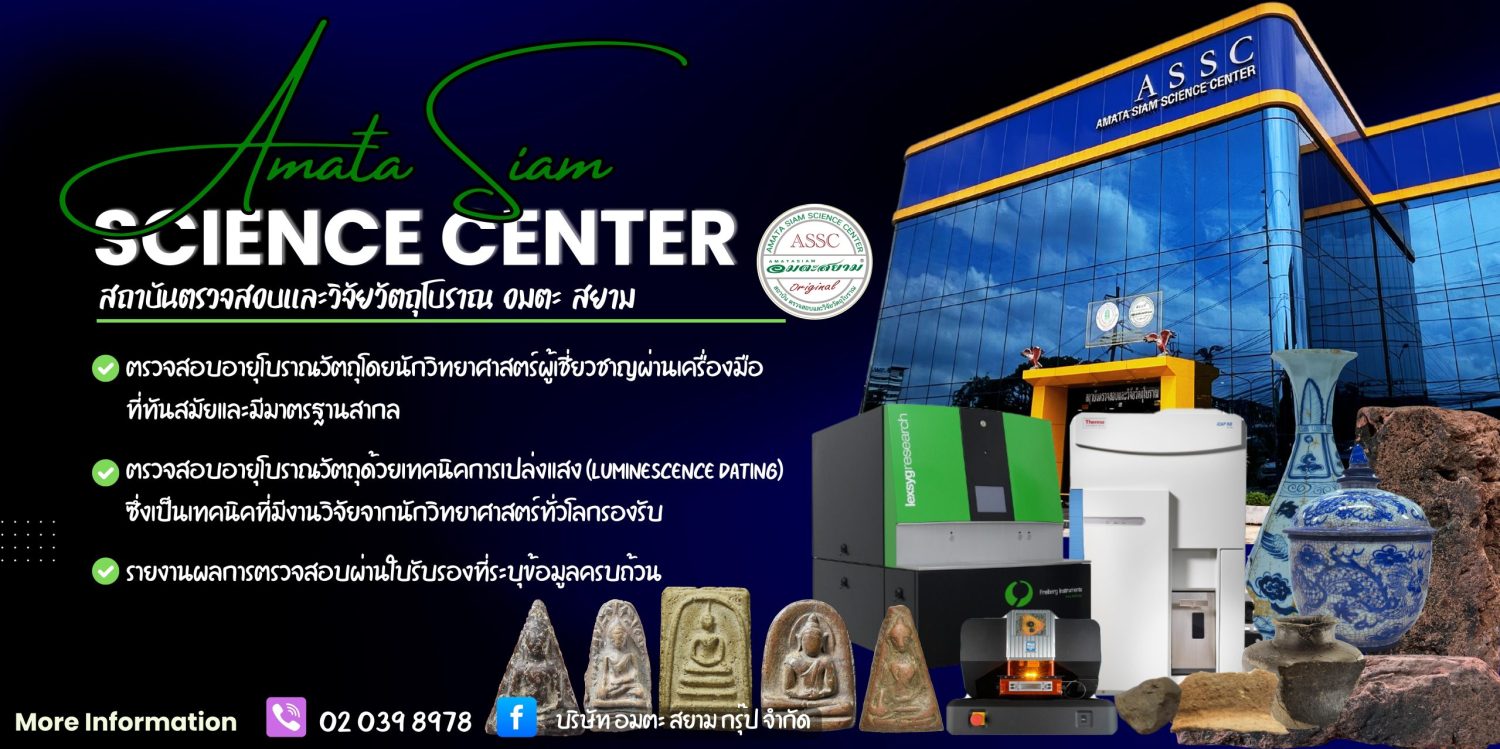
ผลการตรวจสอบทางวิทยาศาสตร์
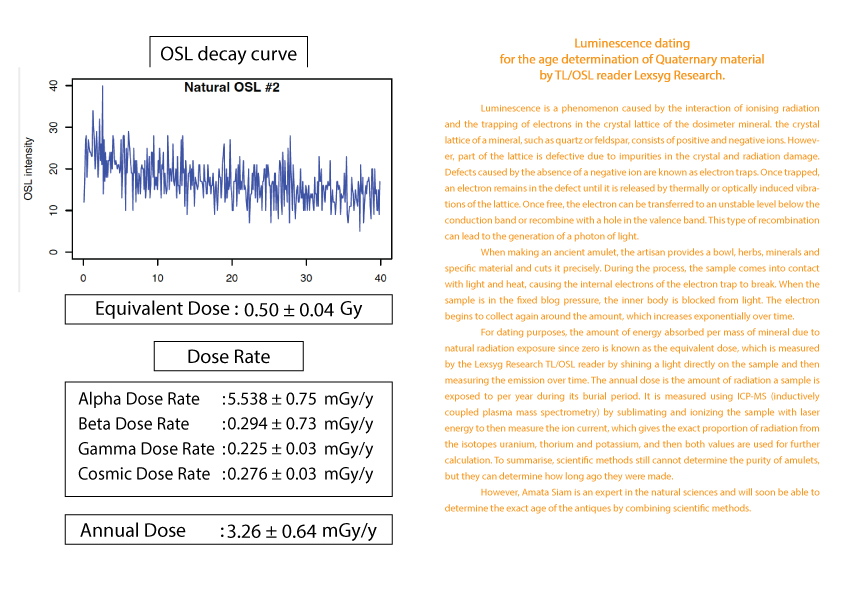
หลักการตรวจสอบทางวิทยาศาสตร์ การกำหนดอายุโบราณวัตถุด้วยวิธีการเปล่งแสง (Luminescence dating) ด้วยเครื่อง TL/OSL reader Lexsyg Research
หลักการโดยทั่วไปของเทคนิค คือ ผลึกแร่โดยทั่วไปจะมีการจัดเรียงตัวของประจุบวกและประจุลบอย่างสมดุล แต่ผลึกแร่ในธรรมชาติส่วนใหญ่มีความบกพร่อง ซึ่งอาจเกิดจากการเย็นตัวอย่างรวดเร็วของลาวา หรือจากการแทนที่ของประจุของธาตุมลทิน ด้วยสาเหตุเหล่านี้ทำให้บางตำแหน่งของการจัดเรียงตัวภายในผลึกแร่ไม่มีประจุลบ และทำพฤติกรรมคล้ายหลุมกักเก็บอิเล็กตรอน (electron trap) เมื่อผลึกแร่ได้รับพลังงานจากการแผ่รังสีของธาตุกัมมันตรังสีที่มีในธรรมชาติจะทำให้อิเล็กตรอนโดยรอบหลุมกักเก็บถูกกระตุ้นและเข้ามาฝังตัวในหลุมกักเก็บอิเล็กตรอน ซึ่งจำนวนอิเล็กตรอนเหล่านี้จะมีความสัมพันธ์กับปริมาณรังสีในธรรมชาติและระยะเวลาที่ผ่านมา ต่อมาเมื่อผลึกแร่ถูกกระตุ้นอีกครั้งด้วยแสงหรือความร้อน จะทำให้อิเล็กตรอนหลุดออกจากหลุมกักเก็บและเปล่งแสงเพื่อคายพลังงานและกลับมาอยู่ในสภาวะเสถียร
ในกระบวนการสร้างพระเครื่องในสมัยโบราณ ผู้สร้างจะจัดหามวลสาร เช่น เปลือกหอย ว่านชนิดต่าง ๆ แร่รัตนชาติ และวัตถุดิบอื่น ๆ มาบดจนมีเนื้อละเอียด ซึ่งในกระบวนการบด มวลสารหรือตัวอย่างจะสัมผัสกับแสงและความร้อน ทำให้อิเล็กตรอนภายในตัวอย่างหลุดออกจากหลุมกักเก็บอิเล็กตรอนทั้งหมด เมื่อนำตัวอย่างเข้าบล็อกพิมพ์ ผลึกภายในเนื้อของตัวอย่างจะไม่สัมผัสกับแสงอีกเลย และจะเริ่มต้นสะสมอิเล็กตรอนใหม่อีกครั้ง โดยจำนวนอิเล็กตรอนที่สะสมเหล่านี้จะมีจำนวนเพิ่มขึ้นตามเวลาที่ผ่านไป
การคำนวณอายุของพระเครื่อง ซึ่งจัดเป็นโบราณวัตถุอย่างหนึ่ง จำเป็นต้องทราบปริมาณรังสีสะสมที่พระเครื่องได้รับจากอดีตจนถึงปัจจุบัน (Equivalent dose) ซึ่งสามารถทราบได้จากเครื่อง TL/OSL reader Lexsyg Research โดยการใช้แสงกระตุ้นไปยังตัวอย่าง จากนั้นวัดปริมาณการเปล่งแสงเทียบกับเวลา และปริมาณรังสีที่พระเครื่ององค์นั้น ๆ ได้รับต่อปี (Annual dose) ซึ่งสามารถทราบได้จากเครื่อง ICP-MS (Inductively coupled plasma mass spectrometry) โดยการใช้พลังงานจากแสงเลเซอร์เพื่อให้ตัวอย่างระเหิดและแตกตัวเป็นไอออน แล้ววัดกระแสไอออน ซึ่งเป็นสัดส่วนโดยตรงกับปริมาณของไอโซโทปรังสี ซึ่งได้แก่ ยูเรเนียม ทอเรียม และโพแทสเซียม จากนั้นจึงนำค่าทั้งสองมาใช้เพื่อคำนวณอายุต่อไป
อย่างไรก็ตาม กระบวนการทางวิทยาศาสตร์ยังไม่สามารถบอกความแท้ของพระเครื่องได้ แต่สามารถบอกได้ว่าพระเครื่ององค์นั้น ๆ ถูกสร้างมาแล้วเป็นระยะเวลานานเท่าใด ทั้งนี้อมตะสยามยังมีผู้ชำนาญการทางด้านธรรมชาติวิทยา การยุบ ย่น หด เหี่ยวแห้ง เมื่อนำกระบวนการทางวิทยาศาสตร์บวกกับธรรมชาติวิทยา จึงสามารถบอกความเก่า-ใหม่ได้อย่างแม่นยำ
Luminescence dating used for age determination of Quaternary materials by TL/OSL reader Lexsyg Research.
Luminescence is a phenomenon which arises from the interaction of ionising radiation and trapping of electrons in the crystal lattice of the dosimeter mineral. The crystal lattice of a mineral, such as quartz, feldspar, consists of positive and negative ions. However, some lattice is defected because of impurities in the crystal and from radiation damage. Defects which have occurred due to the absence of a negative ion are known as electron traps. Once trapped, an electron remains in the defect until released by thermally or optically induced vibrations in the lattice. Once free, the electron can be transferred to an unstable level below the conduction band, or can recombine with a hole in the valence band. This type of recombination may result in the production of a photon of light.
The process of making an ancient amulet, the artificer will provide a shell, herbs, minerals and specific material and precisely grind. During the procedure, the sample will contact light and heat which make the internal electron break of the electron trap. When the sample is in the fixed blog print, the internal body is blocked from light. The electron begins to gather again by the amount that will exponentially increase over time.
For dating, the amount of absorbed energy per mass of mineral due to natural radiation exposure since zeroing is known as the Equivalent dose which is measured by TL/OSL reader Lexsyg Research by using a light to stimulate directly to the sample then measuring it emit due to time. And the Annual dose is the amount of radiation that a sample is exposed to per annum during its burial period measure by ICP-MS (Inductively Coupled Plasma Mass Spectrometry) by using an energy from laser to sublimate the sample and ionized then measure the ion current which is precisely proportion of isotopes radiation which are Uranium, Thorium and Potassium then we bring both value for the further calculation.
In conclusion, however, scientific procedure still can’t tell the pureness of amulets but can tell how long they have been constructed. However Amata Siam is an expert of natural science and combining scientific procedure will soon tell the exact age of the antiques.
科学研究的原则发光法鉴定古董年代(发光约会)与 TL/OSL 阅读器Lexsyg Research
该技术的一般原理是矿物晶体通常具有平衡排列的正电荷和负电荷。但自然界中的大多数矿物晶体都是有缺陷的。这可能是由冷却引起的熔岩的速度或来自元素杂质电荷的位移由于这些原因,矿物晶体排列的某些位置不带负电。并且表现得像一个含电子的空穴。这些电子的数量与自然界和一段时间内的辐射量有关。后来,当矿物晶体被光或热重新激活时,这导致电子从坑中逸出并发光以释放能量并恢复到稳定状态。
在古代制作护身符的过程中创作者会提供贝壳、各类植物、宝石等原材料,研磨成细腻的质地。在研磨过程中质量或样品暴露于光和热。这导致样品中的电子完全脱离电子限制孔。当样品放入打印块时样品中的晶体不再暴露在光线下。并将再次开始积累电子。这些积累的电子数量随时间增加。
护身符年龄的计算被列为古董之一需要知道护身符从过去到现在累计接受的辐射量 (等效剂量)(Equivalent dose)。这可以由 TL/OSL 读取器 Lexsyg Research 通过对样本应用光来确定。然后随时间测量发光量。以及该护身符每年接受的辐射量(年剂量)(Equivalent dose) 。 这可以从 ICP-MS(电感耦合等离子体质谱仪)机器通过使用激光能量升华和电离样品得知。
然后测量离子电流这与放射性同位素、铀、钍和钾的含量成正比。然后使用这两个值来计算下一个年龄。
然而,科学过程仍然无法辨别护身符的真伪。但可以看出那个特定的护身符。建了多久? Amata Siam也有自然科学方面的专家,在将科学过程与自然科学相结合时崩溃、收缩、枯萎。因此能够准确分辨新旧。
ตรวจสอบโดย :
สถาบันตรวจสอบและวิจัยวัตถุโบราณ
ร่วมกับ
ศูนย์พระเครื่องบารมีสมเด็จโต (อมตะสยาม)
ภายใต้การควบคุมดูแลของ
บริษัท อมตะ สยาม กรุ๊ป จำกัด (สำนักงานใหญ่)
อาคาร ASSC เลขที่ 78 ถ.เสรีไทย แขวงมีนบุรี เขตมีนบุรี กทม. 10510
โทรฯ 02-039-8978, 094-789-5226
อีเมล์ : amatasiam2017@gmail.com
by :
Amata Siam Science Center
And
Baramee Somdej Toh Amata Siam Amulet Center
Under the supervision of Amata Siam Group Company Limited (Head Office)
No.78, ASSC THAILAND, Serithai Road, Minburi Sub-district, Minburi district,
Bangkok 10510
Call 02-039 8978, 094-789-5226
Email: amatasiam2017@gmai